
A type of loan or debt financing that is paid back to the lender within a specified time. The repayment structure of such a loan is such that every periodic payment has an interest amount and a certain amount of the principal. Amortization spreads the cost of an intangible asset over its useful life, while impairment occurs when an asset’s market value falls Suspense Account below its book value. The straight-line method spreads the cost of the intangible asset evenly over its useful life.
- While amortization applies to intangible assets, depreciation is used for tangible assets.
- The purpose is to reflect the true benefit of a large expense over a long period.
- In short, amortization can make your life easier as a business owner.
- A software company amortizes a $1 million patent over 10 years, reporting a $100,000 amortization expense annually, impacting EBIT but not EBITDA.
- The borrower is only required to make minimum payments each month, which can result in negative amortization if the interest charged on the loan is greater than the minimum payment.
- Goodwill amortization is when the cost of the goodwill of the company is expensed over a specific period.
What Kinds Of Loans Are Not Amortized?
Each monthly payment includes both interest and principal, gradually reducing the loan balance over time until it’s fully paid off. Depreciation can be calculated using several methods, including Online Accounting the straight-line method, declining balance method, and units of production method. Amortization, however, typically uses only the straight-line method, spreading the cost evenly over the asset’s useful life. A more rapid rate of amortization, depreciation, or depletion will result in a higher amortized cost during the first few years of an asset’s useful life.
How amortization affects loan payments over time
- Consequently, it supports more stable and predictable financial reporting.
- Being aware of these two forms of amortization can help you increase your understanding of finance and accounting—and that should be in the interest of every white coat investor.
- A greater portion of earlier payments go toward paying off interest while a greater portion of later payments go toward the principal debt.
- The borrower knows exactly how much their loan payment is, and the payment amount will be equal each period.
- Each payment includes a portion of both the principal (the original loan amount) and the interest.
Amortization is used to refer to the process of spreading out the cost of an intangible asset over its useful life. Meanwhile, depreciation is used to refer to the process of spreading out the cost of a tangible asset over its useful life. The amortization of intellectual property is calculated based on the asset’s cost, useful life, and expected future cash flows. Accountants use amortization to ensure that the cost of the intangible asset is matched with the revenue it generates. This is in accordance with the matching principle, which requires that expenses be matched with the revenue they generate.
Amortization vs depreciation

No regular amortization; the principal is repaid in full at the end of the asset’s useful life. As a result, the loan is paid off faster than the original amortization schedule. Amortization is a process of allocating the cost of an asset over its useful life.

Both methods reflect the decrease in value of the asset over time in the accounting books. An amortization schedule is a chart that tracks the falling book value of a loan or an intangible asset over time. For loans, it details each payment’s breakdown between principal and interest. For intangible assets, it outlines the systematic allocation of the asset’s cost over its useful life. In summary, amortization is essential for maintaining the integrity and accuracy of financial statements. By allocating the expense of intangible assets over their useful life, businesses can achieve a more balanced and realistic representation of their financial health.
- Elevate your financial acumen with DBrown Consulting’s exclusive newsletter.
- It ensures proper expense allocation, reduces taxes, and keeps books compliant with accounting standards.
- The systematic allocation of the cost of a tangible asset over its useful life.
- To know whether amortization is an asset or not, let’s see what is accumulated amortization.
- ARMs typically have lower initial interest rates than fixed-rate mortgages, but the interest rate can increase or decrease depending on market conditions.
To calculate cost depletion, you take the property basis, units total recoverable, and accounts number of units sold. As you extract natural resources, they are counted and removed from the basis of the property. Amortization is used in various loans, including mortgages, auto loans, and what is accumulated amortization student loans. Each type of loan follows an schedule that outlines the payment structure over the loan term, helping borrowers manage their repayments and understand their financial commitments.
- This process helps businesses show a true and fair view of their financial position.
- You must use depreciation to allocate the cost of tangible items over time.
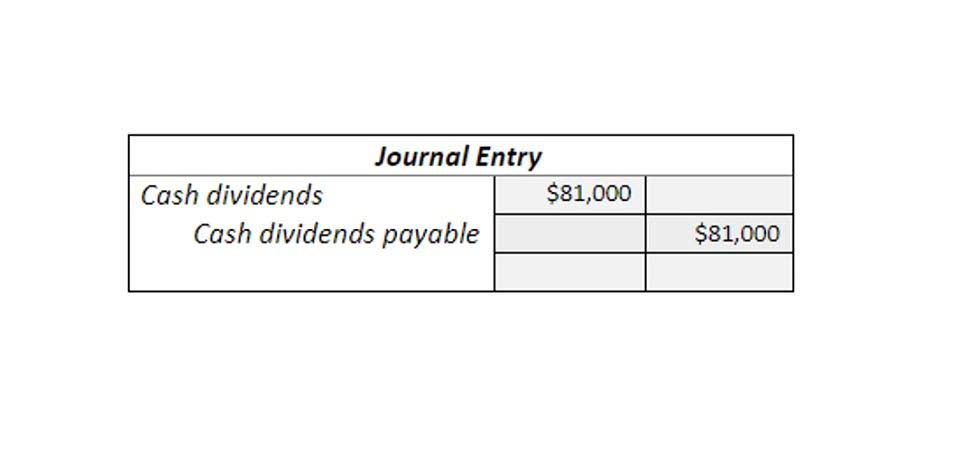
- The accounting for amortization expense is a debit to the amortization expense account and a credit to the accumulated amortization account.
- However, the residual value assumption is usually set to zero, as the value of the intangible asset is expected to wind down to zero by the final period.
- For instance, businesses must check for goodwill impairment, which can be triggered by both internal and external factors.
In this case, the license is not amortized because it has an indefinite useful life. Intangible assets are non-physical assets that are used in the operations of a company. The assets are unique from physical fixed assets because they represent an idea, contract, or legal right instead of a physical piece of property. To assess performance, we will instead use EBITDA (earnings before interest, taxes, depreciation and amortization), which is more directly related to a company’s financial health. The cost of the car is $21,000, but John cannot afford to buy the car in cash.
By using these formulas, borrowers can calculate the total interest paid over the life of the loan, the total monthly payment, and the principal amount paid with each payment. Amortization calculation refers to the process of determining the amount of each loan payment that goes towards the principal amount and the interest cost. The principal is the amount borrowed, while the interest is the cost of borrowing the money. Amortization is recorded in the financial statements of an entity as a reduction in the carrying value of the intangible asset in the balance sheet and as an expense in the income statement. Where ( A ) is the payment amount, ( P ) is the principal, ( r ) is the monthly interest rate, and ( n ) is the total number of payments.